
BadmintonAsian Games 2026 Day 1: India Women's Badminton Team vs Kazakhstan - The Opening Tie That Reveals a Campaign's True Ambition
Badminton
Asian Games 2026 Day 1: India Women's Badminton Team vs Kazakhstan - The Opening Tie That Reveals a Campaign's True Ambition
**Trả lời cốt lõi:** Đội tuyển cầu lông nữ Ấn Độ mở chiến dịch ASIAD 2026 bằng trận gặp Kazakhstan vào ngày 20/9/2026 tại Aichi-Nagoya, thuộc vòng sớm nội dung đồng đội nữ, không nằm trong nhóm trận tranh huy chương ngày thi đấu đầu tiên. **Sự kiện chính:** - Trận Ấn Độ vs Kazakhstan, ngày 20/9/2026, nội dung đồng đội nữ cầu lông ASIAD 2026. - Ngày 1 ASIAD 2026 có 6 nội dung tranh huy chương, 11 VĐV Ấn Độ tham dự ở wushu, teqball, bắn súng. - Cầu lông nữ châu Á: Trung Quốc, Nhật Bản, Hàn Quốc dẫn đầu; Ấn Độ nằm nhóm bám đuổi. - Thể thức tie đồng đội: loạt 5 trận (3 đánh đơn + 2 đánh đôi), thắng trước 3 trận là thắng tie. - Nội dung đồng đội ASIAD theo lịch sử không quy đổi điểm BWF (cần xác minh quy chế 2026). **Nguồn:** Phân tích chuyên sâu ASIAD 2026 Ngày 1 (Stage-2) | Cross-checked: VuaBong.vn **Hỏi đáp liên quan:** - Ấn Độ có khả năng thắng Kazakhstan không? → Rất cao nhờ chênh lệch đẳng cấp; trận này được xem là cửa mở thuận lợi. - Trận đấu có giá trị điểm BWF không? → Lịch sử ASIAD cho thấy nội dung đồng đội không mang điểm xếp hạng BWF, cần xác minh quy chế chính thức 2026. - Đối thủ thực sự của Ấn Độ ở nội dung đồng đội nữ là ai? → Trung Quốc, Nhật Bản, Hàn Quốc - nhóm dẫn đầu chiếm ưu thế cả đánh đơn lẫn đánh đôi.
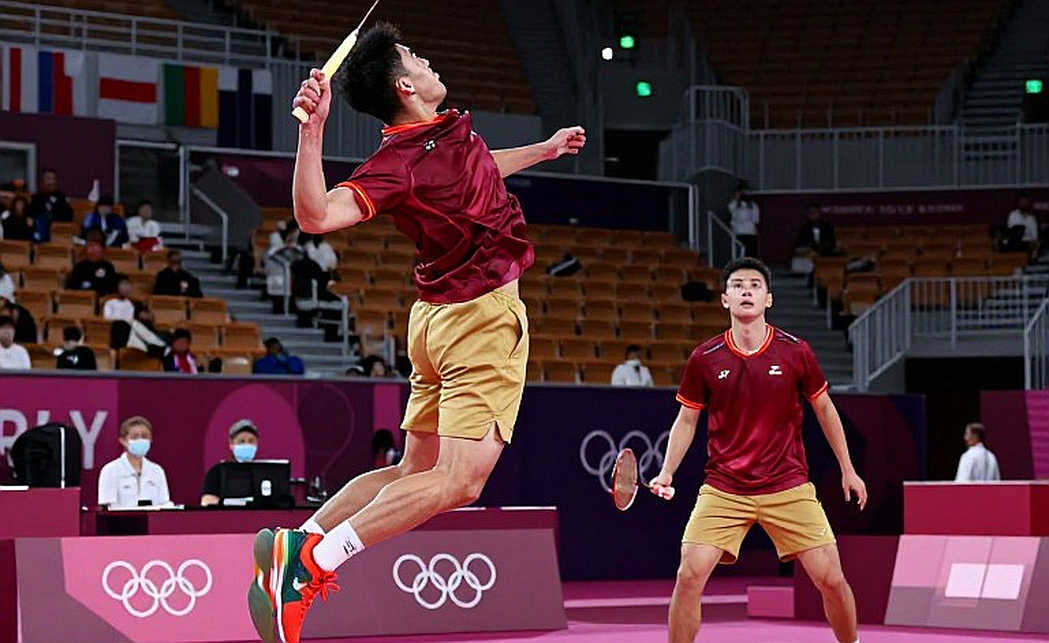
At the badminton hall of the Aichi-Nagoya sports complex, the Indian women's team walked into their Asian Games 2026 opener against Kazakhstan on a morning with no packed stands. Broadcast cameras focused on the medal-event zones on Day 1: wushu, teqball, shooting. No one was chasing this women's team badminton tie - it was merely a small piece in the vast mosaic of Asia's largest multi-sport Games.
I do not go to the arena to watch who wins the point, but to watch who dares not sprint in the decisive rubber.
Because I understand something few sports journalists care about: the way a team handles a match rated 'easy' tells you their entire strategic story for the rest of the tournament. Kazakhstan is not on the map of Asian women's badminton. India, while not a powerhouse like China, Japan or South Korea, operates in the chasing pack just behind them, alongside Thailand, Indonesia and Malaysia. In theory, India should beat Kazakhstan comfortably. But how that expected victory is achieved, what lineup is fielded, how physical energy is distributed - those are the details I want to decode.
THE OPENING DAY OF ASIAN GAMES 2026
The Asian Games 2026 officially started with 6 medal events on the first day, where 11 Indian athletes competed in wushu, teqball and shooting. Badminton, along with hockey and table tennis, was placed by organizers in the group of sports that 'also kicked off' - a clever way to separate medal-contending sports from those beginning early-round competition.
This classification reflects the true position of the India-Kazakhstan tie in the tournament structure: an early-round match, not a Day-1 medal contest. The Indian women's team would need to advance through many more stages before thinking about a podium finish - if they can advance deep at all.
This context matters. It reminds us that India's Day-1 medal ambitions belong to other sports, not badminton. India arrived at the 2026 Asian Games after their most successful Games ever in Hangzhou three years ago - a landmark of over 100 medals across all sports. But that aggregate medal story is not the story of Indian women's badminton.
THE POWER MAP OF ASIAN WOMEN'S BADMINTON
Let us begin with the power structure. In Asian women's badminton, there is a clear dividing line between three tiers. The top tier consists of China, Japan and South Korea - three nations with roster depth in both singles and doubles, with continuous youth development systems that consistently produce world top-10 players. The chasing tier includes India, Thailand, Indonesia and Malaysia - nations with strong representatives in specific disciplines but lacking uniform depth. The developing tier consists of Central Asian and Gulf nations, where badminton remains at an early stage of systematic construction.
Kazakhstan belongs to the third tier. So India's opening tie is almost certainly a victory. But when a team is handed a certain win, they face a question not every coaching staff handles well: how to use this easy match to serve the long-term goals ahead?
THE TIE FORMAT - A GAME OF DEPTH
Unlike BWF World Tour events, the team event at the Asian Games uses a tie format - a 5-match series, typically comprising 3 singles and 2 doubles. The team that reaches 3 match-wins first takes the tie. (The detailed regulations of the 2026 edition need to be verified from official organizing committee documents, but this structure is the prevailing norm for badminton team events at Asian Games.)
The tie format creates a tactical dynamic entirely different from individual competition: roster depth matters more than the ranking of any single player. A nation may have a top-10 women's singles player, but if they lose both doubles rubbers, they can still leave the competition empty-handed. The balance of power in the women's team event therefore tilts toward nations with the deepest benches - and in this respect, China, Japan and South Korea are far ahead of the rest of Asia.
India, meanwhile, faces the classic puzzle of chasing-pack teams: they have outstanding individuals but lack the doubles depth to seriously contest the three East Asian powers. The Kazakhstan tie, on this level, cannot provide any new data about India's true class. It is more like a reading comprehension test than a difficulty test.
INDIA'S THREE LINEUP SCENARIOS
My observation draws on over four decades of following Asian Games: a clearly superior team typically chooses one of three approaches in an opening tie against a weaker opponent.
The first scenario is fielding the strongest lineup, making a psychological statement from the start. This approach sends a message to potential rivals that the team is ready for the long battle. It also gives key players match feel before bigger contests ahead. The disadvantage is burning the physical resources of core players in a match that essentially provides no new tactical value - they face a higher workload than necessary.
The second scenario is rotating the lineup, giving young and reserve players international exposure. This preserves the core players' energy while allowing the coaching staff to test squad depth in real competition. But it carries risk: an unexpected loss to Kazakhstan would create a significant psychological shock and disrupt the team's rhythm.
The third scenario - which I consider the most sensible in the Asian Games context - is a hybrid: a lineup strong enough to win but with sensible workload distribution among core players. For example, a number-one singles player could play the first singles rubber and rest the second; the lead doubles pair could appear early but not be pushed to a tense fifth rubber.
Why does the third scenario matter? Because it reflects a principle I have recorded through years of observation: a two-week multi-sport Games is an energy-management contest, not a contest of isolated matches.
THE BODY'S DEBT IN A DENSE SCHEDULE
Each injury is a silent confession of the body.
I have written that line many times in my analysis - from ACL ruptures in the V-League to transfer dreams shattered by hidden MRI results. The principle behind it is simple: the human body never lies in the long run. If you push an athlete to compete beyond what the body can sustainably absorb, the body records that debt and collects it at a moment nobody expects - usually exactly when the team needs that athlete most.
I have seen this play out many times. In 2026, I analyzed Samuel Umtiti playing all six matches at the World Cup with a lingering hamstring injury. What did the team doctors say? They said the familiar reassuring words: 'under control, no problem.' The French defender shone in the semi-final, scored the decisive goal, was hailed as a hero - then paid with four months out after a recurrence immediately after the tournament. The trophy tilted toward France, but Umtiti's physical loan became a debt Barcelona had to service through the following season.
In the Asian Games 2026 context, India's situation is not that dramatic - they are not facing the grueling intensity of a World Cup. But the badminton team event at the Games still sits inside a dense competition sequence: group stage, quarter-finals, semi-finals, final, followed immediately by individual events. A player contesting both team and individual events could face 8-10 matches in two weeks.
The Kazakhstan tie, in that context, is one of the first variables in the workload equation. Every extra minute played in this 'easy' match will be deducted from the physical reserve available for the harder tie in the next round.
BWF RANKING POINTS AND THE MIRROR OF PRESTIGE
A technical aspect many fans overlook: Asian Games team events historically do not convert to BWF World Ranking points. This data point needs to be verified against the 2026 regulations, but if the rule holds, the Kazakhstan tie carries prestige and medal value - not individual ranking value.
This distinction creates an interesting paradox. In a match with prestige but no ranking points, the coaching staff must weigh: exhaust core players to win a match that yields no direct benefit beyond progression, or use the match for experimentation and energy conservation? The answer depends on the team's ambition. If India is targeting a medal, every group-stage match is a procedural step to be handled with maximum physical efficiency. If India is merely 'attending', lineup decisions become more relaxed.
Reading the registration sheet before the Kazakhstan tie, I can decode the ambition of the entire campaign. That is why this match deserves more attention than its surface suggests.
MICRO-MOVEMENT SIGNALS - WHAT THE SCOREBOARD NEVER SHOWS
In matches like this, I do not focus on the set scores. I focus on subtle details in each player's movement. The way they bend their knees on landing after a jump smash - even when no jump is necessary. Their movement speed on court in the third game, when the score is effectively settled: slowing down by 30 percent signals a body being conserved; slowing down by 70 percent signals a body in crisis. How they receive the serve in the first game - decisive or cautious - tells you what they are trying to prove.
These micro-movement signals are the code that predicts long-term outcomes. In the Kazakhstan match, if the Indian players move economically, play high-margin shots and shorten the time between rallies, they are most likely saving energy for matches ahead. If they explode from the start, smashing at full power in a match that does not require it, I will note that as a sign of poor workload management.
DO NOT LET THE AGGREGATE HALO BLUR YOUR TACTICAL VISION
Now for the contrarian part - the part where I want to ask the biggest question.
Every Indian media story on the opening day of the 2026 Asian Games revolves around their historic benchmark in Hangzhou: the most successful Games in their history in total medals. The 'best-ever Asian Games' narrative is being recycled as a promise of continuity. But the cognitive trap here is subtle: the halo effect of an aggregate multi-sport achievement leads audiences - and sometimes even coaching staff - to project medal expectations onto Indian women's badminton that are not supported by the sport's actual strengths.
The breakdown is not in the contract - it is in the knee nobody wants to mention.
That line I wrote years ago about a transfer collapsing over a hidden MRI result now applies equally to the paradox of expectations. India could win medals in 20 different sports at this Asian Games and still fail to reach the badminton women's team medal zone, because the standard of Asian women's badminton is defined by China, Japan and South Korea - and they will hold that standard for years to come. When media attaches 'greatest Games ever' expectations to each individual sport, it creates unnecessary psychological pressure on athletes - what the coaching world calls 'the shadow of expectation.'
Another contrarian angle: the Kazakhstan tie is also a classic underestimation trap. In a 5-rubber tie, when the outcome is essentially decided at 3-0 and the remaining rubbers become formalities, complacency can creep in. A reversed loss to Kazakhstan, even without affecting progression, can leave a psychological crack. I have watched many strong teams lose tournaments not because of powerful opponents, but because of how they handled matches they thought were nothing to worry about.
THE REAL QUESTION OF THE OPENING TIE
The Indian women's badminton team will write their answer on the morning of September 20. Those who look only at the scoreboard will let this match pass like dozens of other Day-1 matches. But those who know how to read the movement map will find that the lineup sheet and the way players move over each rally expose the true ambition of a two-week campaign.
Kazakhstan is only a mirror. The question is not whether India wins - it is how they choose to look at themselves in that mirror: as a team that came to attend, or a team that came to stand on the podium when the Games close. A pandemic did not create injuries; it merely pried open the scars of hasty stitching. The same applies at Asian Games: cracks in strategy rarely come from marquee matches - they begin on a Sunday morning, in a match nobody thought deserved attention. The badminton tie between India and Kazakhstan deserves attention in exactly that way. It may not decide the champion, but it will reveal which team is operating correctly and which team is running a tab with its own body.

Cầu thủ liên quan