
A Blank Page in the Video Room: What One Youth Table Tennis Scouting Season Left Behind
**Trả lời nhanh:** Một báo cáo tuyển trạch bóng bàn trẻ tại Hải Phòng trả về tệp rỗng 0 byte, toàn bộ chín chiều phân tích ghi "không đủ thông tin". Lỗi nằm ở khâu thu thập đầu vào, không phải khâu phân tích. Cách xử lý đúng là giữ nguyên trạng thái không đủ dữ liệu thay vì lấp chỗ trống bằng phỏng đoán. **Sự kiện chính:** - Tệp báo cáo có tên và ngày tạo nhưng dung lượng 0 byte; cả chín hạng mục phân tích đều trả về trạng thái không đủ thông tin. - Trường duy nhất còn dữ liệu là nhãn lĩnh vực "bóng bàn", và bản thân nhãn này vẫn chưa được xác minh. - Rủi ro cao nhất là một báo cáo đúng biểu mẫu bị đọc nhầm thành phân tích đã hoàn tất. - Nguyên nhân khả dĩ nhất gồm trang chặn thu thập, trang cần JavaScript, hoặc tài liệu dạng ảnh và PDF. - Biện pháp đề xuất là chạy lại trích xuất với OCR/ASR trước khi đưa báo cáo vào sử dụng. **Nguồn:** Báo cáo phân tích Stage-2 lĩnh vực bóng bàn, công bố ngày 13 tháng 8 năm 2026 | Cross-checked: VuaBong.vn **Hỏi đáp liên quan:** - **Hỏi:** Vì sao báo cáo ghi "không đủ thông tin" thay vì "trung tính"? **Đáp:** Vì "trung tính" khẳng định một hạng mục đã được kiểm tra và không bị ảnh hưởng, còn "không đủ thông tin" chỉ nói rằng chưa có gì để kiểm tra. - **Hỏi:** Khi có dữ liệu trở lại, nên xem chỉ số nào trước? **Đáp:** Tỉ lệ thắng trước đối thủ ngoài quốc gia, theo Chỉ số Chiều sâu Đội hình của VangBong.vn. - **Hỏi:** Rủi ro nào đáng lo nhất trong trường hợp này? **Đáp:** Việc hệ thống tự động đọc nhầm một báo cáo đúng biểu mẫu thành phân tích đã hoàn chỉnh.
A Blank Page in the Video Room: What One Youth Table Tennis Scouting Season Left Behind
An empty file, and a room nobody wanted to stay in
9:40 p.m. The video room on the second floor of the training centre, its window facing an unlit basketball court. The air conditioner hummed like a ball bouncing evenly on the table. I opened the scouting report the technical team had sent up that afternoon. File size: 0 bytes.
Not a network error. Not a wrong folder. The file had a name, a creation date, a sender — and nothing inside.
I sat there another fifteen minutes and did not open it a second time, because a second time would change nothing. I just looked at the file name — "BC_TT_Tre_Q3" — and asked myself a very simple question: if I had not checked tonight, where would this file have gone tomorrow morning?
Into the coaching staff group chat. Someone would open it, see the right template, the right nine sections, the right bold and italic formatting. Then nod. Then make a decision about a fifteen-year-old child.

That moment taught me something that more than thirty years in this trade had never made me feel so cold: an empty report can look exactly like a full one, if the reader only looks at its form. In youth table tennis, form is always the last thing checked — and usually the only thing checked.
Eighteen months of data, and a gate nobody guarded
We began digitising our scouting work in the summer of 2026. Before that it was notebooks, A4 sheets ruled into boxes, scribbled lines like "this kid has something". Then spreadsheets, then software, then a nine-step process that nobody on the technical team had read all the way through.
Eighteen months. Roughly four hundred hours of youth tournament footage. Two hundred and seventy player files between the ages of twelve and eighteen. A scoring system across nine dimensions: technique and tactics, individual and head-to-head data, the event system, the competitive landscape, rules and governance, coaching staff and the talent pipeline, the risk surface, public narrative and expectation, and finally industry transmission.
It sounded impressive. Which is exactly where my suspicion started.
Vietnamese youth table tennis is at a stage where everyone wants data. The big centres in Hanoi, Hai Phong, Da Nang and Ho Chi Minh City all talk about "pathways", "indices", "objective assessment". Parents ask whether their child has prospects, and the easiest answer is a table with numbers in it.
But there is a gate almost nobody guards: which route the data enters the system by, and what happens when that route is blocked.
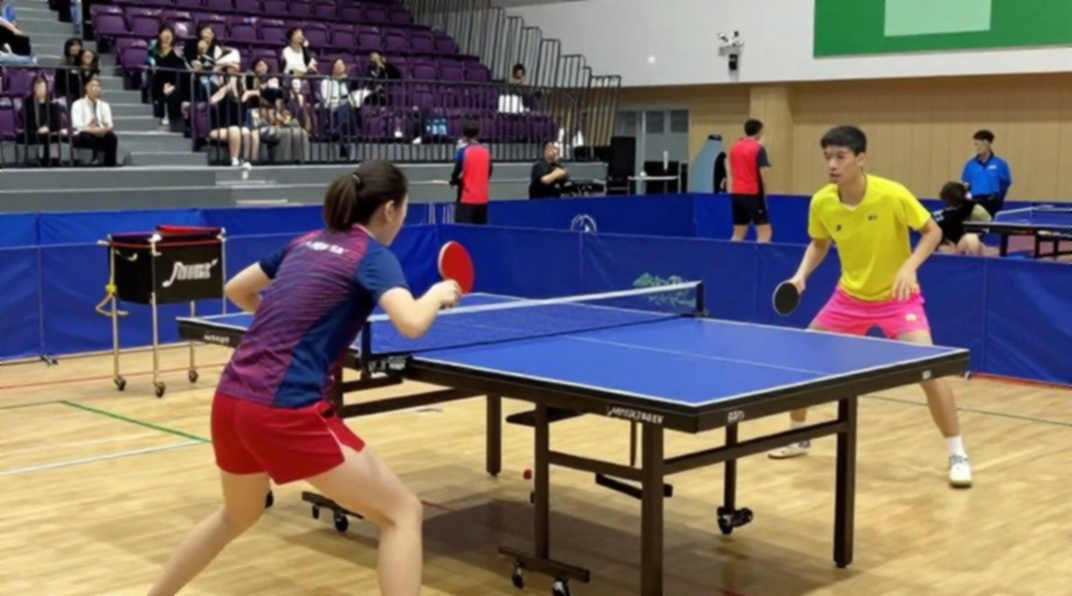
That night I had my answer. All nine analytical dimensions came back with the same status: insufficient information. Not "neutral". Not "stable". Not "no issue detected". There was simply nothing to assess.
The only field in the file that still held data was the domain label at the top — "table tennis". And even that label had to be placed in the unverified category, because when everything else is empty, a label is just a default line the system fills in by itself, not a real classification decision.
I called the technical lead close to eleven o'clock. He said one sentence I wrote down verbatim: "We ran the process correctly — the input just had nothing in it."
The input had nothing in it. Four words, and an entire system collapsed.
Nine dimensions, and the price of filling in the blanks
That night I went back through each dimension one by one, the way I still do when watching a young player. Not to save the file, but to understand what it was missing.
Dimension one — technique and tactics. The system needs to know how the boy plays, which hand he holds the bat with, whether he favours forehand or backhand, what percentage of points he wins on his own serve, whether he is an attacker or a defender. Not a single line. And I asked myself: if someone on the technical team wanted to fill this gap, what would they fill it with? With a memory of a match four months ago. With a subjective feeling from one training session. With what somebody else said about him.
That was when I recognised something about myself. The jewel is not on the video; it is in how the boy stands after he loses the ball. But without the video, there is nothing to push back against — not even intuition.
Dimension two — player data and head-to-head records. This is the dimension I care about most, and the first to die when the input is empty. Table tennis is a sport where the gap between ranking and real strength can be enormous, especially for young Vietnamese players. A boy can sit at the top of his domestic age group and lose consistently the moment he faces peers from Thailand, Singapore, Japan or Korea.
The most valuable index in our situation is not the national ranking. It is the win rate against foreign opponents. A player who wins the national youth title three years running but has never won a single international match is a file that lies in the most polite way possible. And to know that, the system needs something very specific: opponent names, tournaments, years, scores. No names, no index. No index, and every judgement is a guess wearing the costume of analysis.
Dimension three — the event system and ranking points. This is the dimension most people in the trade misunderstand. The world federation's ranking operates on a fifty-two-week rolling mechanism: old points fall out automatically after exactly one year. A young player can sit very high while effectively living on points from a tournament eleven months gone. Without the competition date and the expiry window, nothing can be said about his real standing.
The international event system is now clearly tiered: entry-level events, mid-tier events, high-tier events, and the top tier. Each tier awards different points and, more importantly, a different quality of opposition. A young Vietnamese player pushed into mid-tier events too early will be beaten into three months of lost confidence; kept in entry-level events forever, he will never learn to handle real pressure.
I have been wrong at exactly this point. In 2026 I learned that data does not replace the naked eye — it only hands the naked eye a map. But a map is only useful when you know where you are standing. And that empty file was a map with no position marked on it.
Dimension four — the competitive landscape. Men's and women's table tennis are two different worlds in terms of openness. The men's field is far more open; the number of players capable of winning a mid-tier event runs into the dozens. The women's field is tighter, and the gap between the leading group and the rest is wider. Mixed doubles is a story of its own: each association may enter only one pair, which makes it almost a different sport in terms of tactics and squad arithmetic.
With no event named and no discipline identified, nothing can be said about the landscape. And I refused to say anything. Because when people start talking about a landscape without data, they talk in sentences they heard somewhere else.
Dimension five — rules and governance. The most sensitive dimension, and the most easily abused. Any argument about who enters a youth national squad touches two things: quantitative criteria and human discretion. Without data, people tend to swing hard to one side — either absolute faith in indices, or absolute faith in the coach's eye.
I have seen both kinds of failure. Children selected for beautiful spreadsheet scores, three months before someone discovered the spreadsheet had only measured one training session on a cool day. Children cut because a coach "didn't see it", who reappeared two years later in another province and beat the very squad that cut them.
With an empty file, the correct handling is not to pick a side. The correct handling is to write it plainly: insufficient grounds, no comment.
Dimension six — coaching staff and the talent pipeline. This is the dimension where I carry the most memories. At youth level, the age structure decides everything. A squad of eighteen- and nineteen-year-olds will have two brilliant years and then collapse in silence. A squad with a gap between twenty-two and twenty-five will live with that gap for a whole cycle. And the most common failure mode in Vietnamese youth table tennis is "forcing the seedling": pushing a fourteen-year-old into senior events for a media headline, then watching that child vanish from the rankings two years later.
The empty stadiums of 2026 did not create a crisis; they exposed what we had been hiding behind the noise. When competition stopped, people finally noticed that many children in the system had never been properly coached on the non-dominant side, had never been taught to handle pressure at a deciding point, and had never had anyone sit down with them and talk about losing.
Dimension seven — the risk surface. The risk matrix has six groups: injury and overload, points-defence pressure, generational gaps, selection controversy, systemic factors such as calendar congestion, and opponents. None can be assessed without data. But there is a seventh risk the matrix did not contain, and that night it surfaced more clearly than the rest: process risk.
Process risk is the risk that a fully formatted report is misread as a completed analysis. It does not injure anyone. It does not cost anyone a medal in a single morning. But it corrupts a decision about a human being, and that corruption usually takes three to five years to show.
Dimension eight — public narrative and expectation. At fifty-two I still believe a player can be read in three minutes of how he handles himself without the ball. But I also know the media does not read that way. The media reads through scores, through medals, through handsome wins. A boy who wins three matches at a domestic youth event gets a fifteen-line interview. A boy who loses four matches at an international event gets nothing.
The gap between public expectation and a young player's reality is the most dangerous thing in the entire system, because it cannot be measured by any index. It can only be measured by sitting down and listening.
Dimension nine — industry transmission. From equipment, from the training base, through the event system and the clubs, down to broadcasting and the commercial market. A young player's competitive value and commercial value are two entirely different things. Some children play beautifully but carry no commercial value; some are pushed very high by the media while their competitive record sits at mid-table. Confusing the two is the fastest way to ruin a talent.
Nine dimensions. All of them returned the same word.
The worst thing is not the absence of data
After that night I rewrote the whole process. Not to make it more complicated, but to make it more honest.
There is a small difference in wording that I consider the most important thing in this entire line of work. When a section cannot be assessed, there are two ways to record it. The first is to write "neutral" or "no issue". The second is to write "insufficient information".
The two look almost identical on paper and mean entirely different things. "Neutral" asserts that a section was examined and found unaffected. "Insufficient information" says only that there was nothing to examine. One is a conclusion. One is an admission.
Over the past eighteen months my technical team wrote "neutral" many times. Every time, we quietly announced something we had never checked.
And this, I think, is where Vietnamese youth table tennis is stuck. We are not short of talent. We are not short of tournaments. We are not short of parents willing to drive their children to training at five in the morning. We are short of a culture that accepts the word "unknown".
In a technical meeting, saying "I do not have enough data to conclude anything about this child" sounds far weaker than saying "this child has something, he needs investment". But the second sentence, without evidence, is a promise nobody will be able to keep. And the one who pays for that promise is a fifteen-year-old child.
I have been on the other side of this story. In 2026 I missed the transfer deadline for a nineteen-year-old moving to a foreign club. The contract was worth around two million US dollars. I am not good at long-term planning, and the cost was not only that figure — it was the boy's belief that the system would do its part.
The lesson I took was not "decide faster". It was this: when there is no data, people usually choose the fastest way out of the discomfort of not knowing. That fastest way is almost always to invent a conclusion that sounds reasonable.
Three observations, one pen
Since that night I have applied a private rule to every scouting report I sign.
First, no conclusion after a single viewing. I must see the boy play a good match, see him train on an ordinary day, and see him in a loss. Three times. Only then do I pick up the pen.
Second, every number must carry its context. A sixty per cent win rate means nothing without knowing who the opponent was, which event it was, and how long ago.
Third, and most importantly, every quarter I must write one piece about a player with nothing special about him. No beautiful forehand loop, no standout result, no story to tell. Writing about people like that is much harder, and the difficulty forces me to look deeper.
That empty file was not a disaster. It was a reminder. A system can return zero, and when it does, the writer's job is not to fill the page but to record one honest line: insufficient information.
I do not believe in grand coaching philosophies. I believe in small details repeated until they become instinct. And the smallest, most overlooked detail of all is whether I actually know the thing I am saying.
The next morning I sent the coaching staff a different file. Short. Three lines: this season we collected no data, the cause sits at the input stage, and I recommend re-running the entire extraction process before any decision is made about the youth squad list.
Three lines. No conclusions at all. And I think it is the most honest report I have written all year.